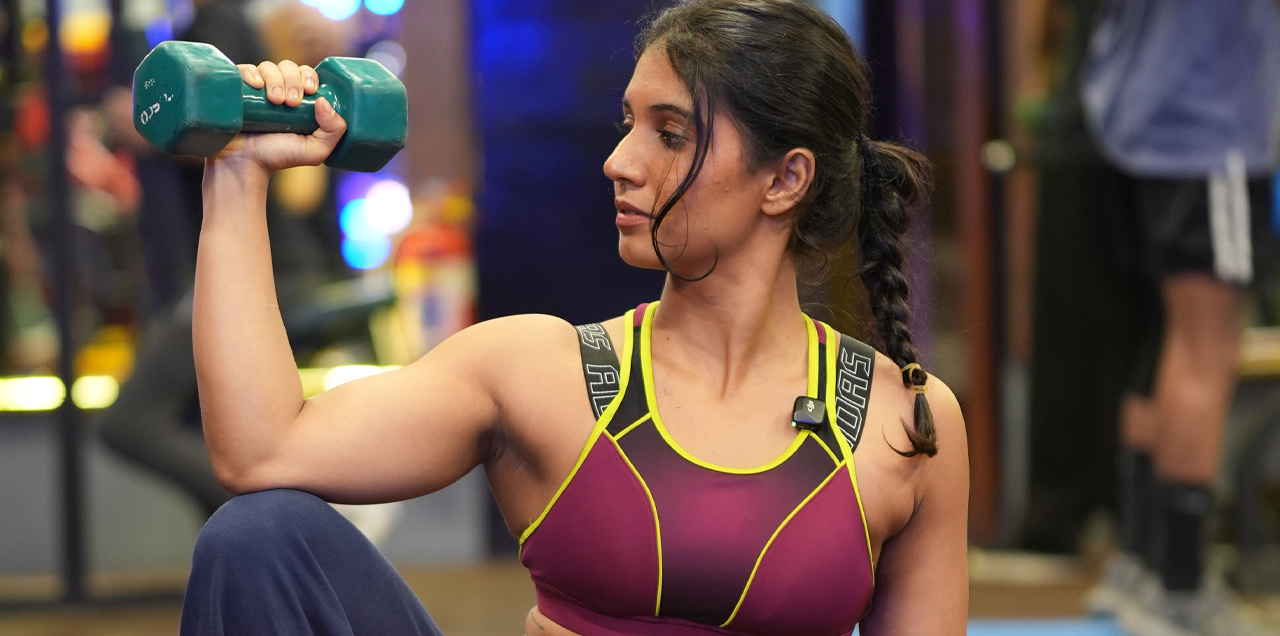
Walk into any gym today and you'll see something positive. People are lifting more, running more, and taking their health seriously. Fitness feels like a normal part of daily life now, which is a big shift from a few years ago. But as training becomes more popular, injuries are becoming just as common. Shoulder pain, lower-back stiffness, knee trouble, most of these issues build up quietly because people chase workouts without fixing the basics.
That is exactly why we sat down with Maulika Sharma, a health coach who works closely with people dealing with posture issues, chronic pain and training-related injuries. She sees these problems every day and knows how simple habits can turn into long-term pain if not corrected early. In this Q&A, she speaks to anyone who works out, explaining what's going wrong, what needs more attention and how to build strength without breaking the body.
Q1. People are training harder today, yet injuries seem to be rising. Why is this happening?
"You would expect fewer injuries as people get fitter, but what actually happens is the opposite," Maulika says. "People carry years of bad posture into the gym and the body keeps compensating for it."
She sees lower-back injuries the most. Long hours of sitting leave the core and glutes weak, so the lower back ends up doing all the work. When someone walks into the gym with this posture and starts lifting without correcting anything, the stress on the back builds quickly.
"Many people don't know their posture is wrong," she explains, "and constant lower-back pain becomes normal for them, even though it shouldn't be."
Her message is simple. Fix the way your body moves before you add weight. If the foundation is weak, everything you do on top of it becomes risky.
Q2. Before people get into heavy strength training, what should they focus on?
According to Maulika, the answer is always the same. Build the foundation first.
"Most people have weak glutes, weak cores, weak rotator cuffs and weak mid-backs," she says. "These muscles keep your body stable, and if they're not strong, you're already at risk."
She believes beginners should work on smaller supporting muscles, add mobility training, improve joint control and slowly teach the body how to move well. Only after this should they move to heavy lifts.
"When you enter a gym, don't rush to the weights. Correct your posture, build mobility, work on stability. These steps make fitness long-lasting and pain-free."
This is the part many skip because it feels slow, yet it protects them from injuries that can keep them out of the gym for months.
Q3. Many people struggle to understand the source of their pain. How can someone know whether it's technique, overuse or poor recovery?
"The first thing I check with any client is posture," she says. "Bad posture with added load is the biggest cause of injuries."
She observes how a person stands, moves and performs simple exercises. Small details like a raised shoulder, a collapsing knee or a rotated hip help her understand where the weakness or compensation lies.
She also looks at their training history. Sometimes the injury isn't from one bad movement but from doing the same pattern too often without enough rest.
"Between posture, their training schedule and how they describe the pain, you can understand why it happened," she says.
Anyone who trains can apply this thinking too. Notice how you sit, how you feel during workouts and which exercises you repeat often. The body always leaves clues.
Q4. Mobility and stability sound basic. Why are they so important?
For Maulika, this is the heart of injury prevention.
"Everything starts with mobility and stability," she says. "They keep your joints healthy, and once that is in place, you can build strength safely."
Mobility helps the joints move smoothly, while stability allows the surrounding muscles to support those movements. When both work together, your body can handle more load without strain.
"It might not look exciting, but building this foundation helps people stay injury-free for years," she adds.
Q5. What does a simple rehab plan look like for common injuries like shoulder pain, lower-back strain or knee issues?
For shoulder impingement, she begins with release work using a foam roller or tennis ball, then strengthens the rotator cuff, improves shoulder mobility, opens the chest and builds upper-back stability. She always starts slow and increases the load gently.
For lower-back injuries, she teaches clients how to engage their core properly, then works on lower-body mobility because tight hips and tight groin muscles often pull the lower back into poor positions. Once mobility improves, she adds controlled strengthening.
For knee problems, her focus is stability again. She strengthens the glutes, then works on each part of the quadriceps instead of treating the muscle group as one unit, and she includes foam rolling and mobility. Progress happens step by step.
Her approach is structured yet simple, which makes it easy for people to follow.
Q6. What signs should people watch for during workouts to know they might be close to an injury?
"The biggest sign is posture," she says. "If someone lifts with poor alignment, a part of their body is definitely compensating."
She also asks clients to share how they feel during exercises. A sudden pull, a sharp sensation or a strange current-like feeling are signals that something is not right.
"You have to be aware and communicate with your body," she believes. "Discomfort is not something you push through. It usually means the body is warning you."
Q7. After someone recovers from an injury, how should they return to training without hurting themselves again?
Her first rule is simple. "Get clearance from a doctor or physio," she says.
Once that happens, she begins with slow strengthening of the muscles that weaken during recovery. Then she focuses on fixing the original cause, whether it was posture, mobility or technique. "It takes patience," she explains, "but it's the only way to come back safely."
Towards an Injury Free Future
Injuries in the gym rarely appear out of nowhere. They grow from small habits, long hours of sitting, weak stabilising muscles and rushing into movements the body isn't ready for. Maulika's approach is a reminder that strength is not only about lifting heavier or pushing harder. It is about moving well, understanding the body and building the kind of foundation that lasts.
Check out Hello Fitness Magazine. There is never a wrong time to go on a fitness quest. Contact us and allow us to assist you in leading a better lifestyle. Follow us on Instagram. We share the best Health & Fitness related Articles for information based on healthy eating, health and fitness recommendations, health problems and their solutions, human body fitness, and much more.