


Imagine sitting in a consultation room with test results you barely understand. The medical terms blur together, the implications feel uncertain, and every search online has only made things worse. You've spoken to friends, maybe even visited other doctors, yet nothing feels clear. What you have, what it means, what comes next, everything sits behind frosted glass.
Then your name is called. You step into the cabin, hand over your reports, and wait. Those few seconds are uncomfortably long. You don't know what you're about to hear, or how serious things really are. The AC feels too cold. Your heartbeat is too loud.
And then the doctor begins to speak. Suddenly, the fog starts to lift, not because the diagnosis changes, but because someone is finally explaining your condition without ambiguity. No vague possibilities or scattered options. Just clarity, presented directly and precisely. And beneath that clarity, a calm reassurance that steadies your own breathing.
That's the experience countless patients have with Dr Nishit Shah. Clarity and composure are not his techniques; they are his discipline, built over decades of practice, patience, and learning. He believes, "Patients want to know what they have, what they need, and what will prevent a recurrence." A doctor's first duty is to explain the problem in simple, precise terms so the patient stops imagining the worst.
With more than three decades in ENT and a national reputation for endoscopic skull-base surgery, Dr Nishit Shah represents the rare combination of technical mastery and disciplined communication.
This article explores the mindset behind his steadiness, the architecture behind his decisions, and the humanity that shapes every step he takes in and out of the operating room.
The Lineage, the Mentors, the Making of a Surgeon
The calm and confident demeanour of Dr Nishit Shah is not just the byproduct of years in service. In fact, His acumen was built long before he ever held an endoscope; shaped by lineage, observation, and the influence of the right people at the right time.
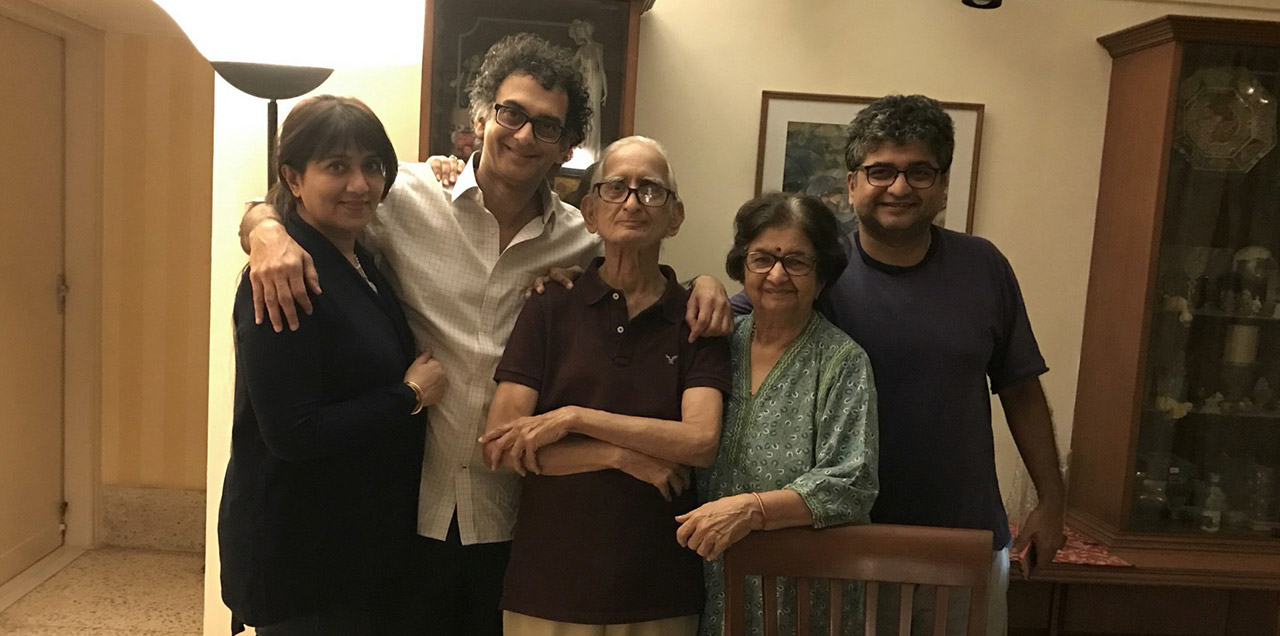
He comes from a family where ENT wasn't just a profession but a legacy. "My grandfather started the department of ENT at KEM hospital," he recalls. His father carried on the legacy, and Dr Nishit was there during his early days, learning at close hand. "I would sit with my father, listen to him talking to his patients. It taught me how to deal with patients," he says.
His actual learning as a surgeon began with the biggest names of India, Dr Kirtane. "At KEM Hospital, I stood second-in-command to Dr Kirtane, one of the earliest pioneers of FESS in India," he recalls. Watching difficult surgeries from just a few feet away, learning how to navigate risks, and knowing a mentor stood behind him if anything went wrong, strengthened his already strong foundation.
Following this experience, he decided to learn from the world and chose multiple international centres. Each offering a different technique, a different way of thinking.
Europe taught him more than surgery, though; it taught him survival, confidence, and how to stay calm when nothing goes as planned. He stayed in a foreign country for several months, in a place where no one even spoke his language. Navigating such a situation builds real character. He says, "Being three months on your own teaches you to deal with everything. Surgery is no different."
Over the years, he has continued to learn from the best, including Dr Sethi, PJ Wormald, Amir Kassam, and Ricardo Carrau; each adding a new dimension to his skill set. These weren't just teachers. They are the architects of his decision-making, precision, and calm.
From First Cases to National Influence
Skull base surgery didn't enter Dr Nishit Shah's career as a sudden turning point. It grew naturally from his early exposure to ENT through his father, and later from what he witnessed during his years at KEM Hospital. As a lecturer there between 1992 and 1996, he saw Dr Kirtane perform advanced endoscopic procedures like CSF leak repairs and optic nerve decompressions. Those experiences stayed with him. "I went to Hinduja Hospital a few times just to watch him do pituitary surgery," he recalls. "That was the initial spark."
Fascination became purpose in December 1999, when neurosurgeon Dr C E Deopujari approached him at Bombay Hospital to assist in an endoscopic pituitary surgery. That first case marked the beginning of a journey that has now spanned 25 years. "Since then, we haven't looked back," he says. In an era with no videos, online material, or structured guidance, every step had to be worked out independently. "This pioneering effort—developing our own techniques—is really what provided the fuel to keep me going."
As technology evolved, so did his practice. But his impact extended beyond surgery. In 2007, he launched one of India's earliest fellowship programs in endoscopic sinus and skull base surgery. "We've now had more than 50--55 fellows from across the country," he says. The aim was scale—training surgeons who would train many more. The program also championed the ENT--neurosurgery team approach, a model he continues to advocate through workshops, international demonstrations, and long-standing involvement with Rhinocon, where he has played a formative role in shaping the field.
Where Skill Meets Stillness: Inside the Operating Room
All the years of learning and mentorship collapse into one defining space: the operating room. Inside the OR, the rules for Dr Nishit are simple: stay steady, stay sharp, stay present. "My eyes never leave the screen once a procedure begins," he proclaims.
Focus isn't an effort for him; it's his default state. While others worry about distraction or boredom, he doesn't even hear people talking during a case. "You must enjoy what you're doing," he says, because it's only when you stop enjoying that you lose focus and get distracted.
And frankly speaking, there's just no room for distraction in his line of work, which is why training your body, as much as you train your mind, is equally important. He explains, "A tired back, stiff shoulder, or weak knee can turn a four-hour skull base surgery into a risk." These surgeries do not tolerate even a little bit of carelessness, he adds. Any complication here is disastrous.
The challenges are constant. Skull base work puts him millimetres away from the optic nerves, major blood vessels, and the places where even a minor slip can change a life. The hardest part, he says, isn't removing the tumour, it's knowing when to stop. "At any point the risk is more than the benefit, the surgery must stop," he explains.
Years of preparation have given him a steady mind. Inside the OR, all of it comes together—skills, judgment, and the discipline to do only what the patient truly needs.
The Mind That Never Stops Learning
What separates a great surgeon from the rest isn't just mastery of the craft; it's the refusal to believe that mastery is ever complete. Dr Nishit Shah embodies that mindset. Across 33 years of practice, he has never stopped updating, questioning, or refining the way he works. "What we did ten years ago, we are not doing today," he says. "Techniques, equipment, instruments, everything keeps changing."
He has watched the field transform before his eyes. "When we started, we were operating with halogen lights and TV screens. Today we have LED with 4K, and we ourselves wonder how we were working back then." It's this awareness and humility, that fuels his longevity. Workshops and conferences aren't just places where he teaches. "For me, they are as much for learning as they are for training others," he explains.
Apart from reading materials, younger colleagues also keep him sharp. Their questions push him to think harder, read more, and reassess what he knows. "Sometimes they come up with solutions I haven't thought of," he admits.
He approaches AI the same way he approached endoscopy decades ago—with curiosity, caution, and a readiness to grow alongside it. "AI is still in its infancy," he believes, "but it will contribute immensely. It will help us plan better, the same way endoscopes once did when people doubted them."
This shows that learning, for him, isn't a phase. It's as important as the scalpel he holds.
Quiet Strength Behind His Success
Behind Dr Nishit Shah's steady presence in the operating room is a family that shaped both his values and his resilience. His father, an ENT specialist himself, was his first teacher; someone he quietly observed, learning how to speak to patients, build trust, and remain ethical even when decisions were difficult. That early grounding became the backbone of his own practice.
His wife, meanwhile, has been the force that kept everything steady outside the hospital. She made sure the home was calm, encouraged him to stay relaxed with patients, and took on the emotional load so he could focus on the surgical one. "You can't do this without support at home," he admits. Together, they created the balance that allowed him to grow not just as a surgeon, but as a person capable of handling the demands of a lifelong, high-stakes craft.
His Guiding Belief
In the end, what defines Dr Nishit Shah isn't just precision or experience; it's the conviction that medicine must remain ethical, no matter how technology evolves. He worries about shortcuts and complacency, but he also believes the next generation can rise higher if they treat every patient as a responsibility, not a routine.
His hope is simple: that young doctors stay curious, stay honest, and stay grounded in the values that built this field. Tools will change, AI will grow, techniques will advance, but integrity, he says, is the one value that has to stay constant.
Check out Hello Fitness Magazine. There is never a wrong time to go on a fitness quest. Contact us and allow us to assist you in leading a better lifestyle. Follow us on Instagram. We share the best Health & Fitness related Articles for information based on healthy eating, health and fitness recommendations, health problems and their solutions, human body fitness, and much more.