


You see a powerlifter or athlete on stage, and everything looks under control. The poses land exactly where they should, movements feel deliberate, and the whole thing comes together in a way that almost looks easy. It's the kind of moment where it's easy to assume some people are just built for it.
What doesn't show up in that moment is how much has already gone into holding that together. The days leading up to it are structured in a way that doesn't leave much room to drift, and it stays that way whether the body feels up for it or not.
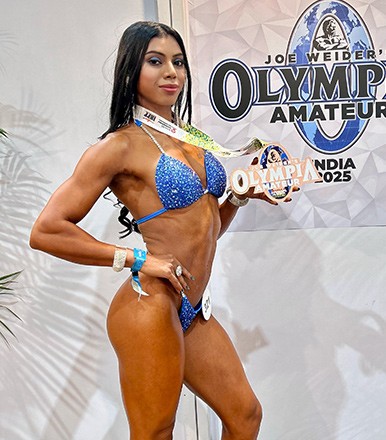
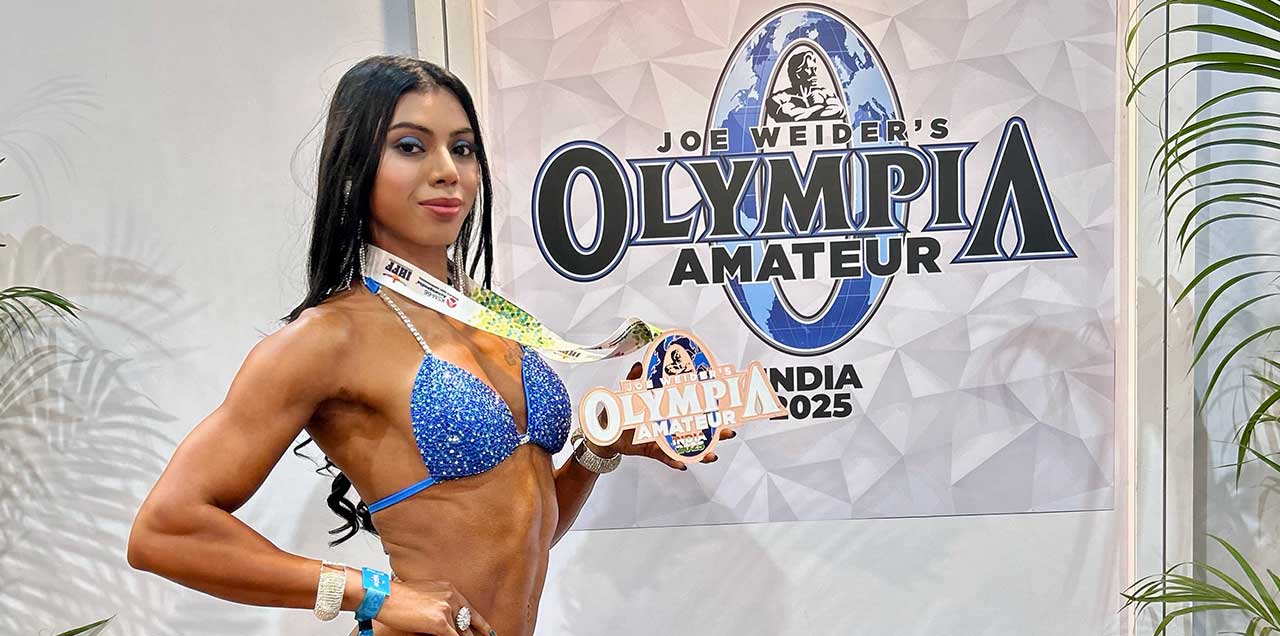
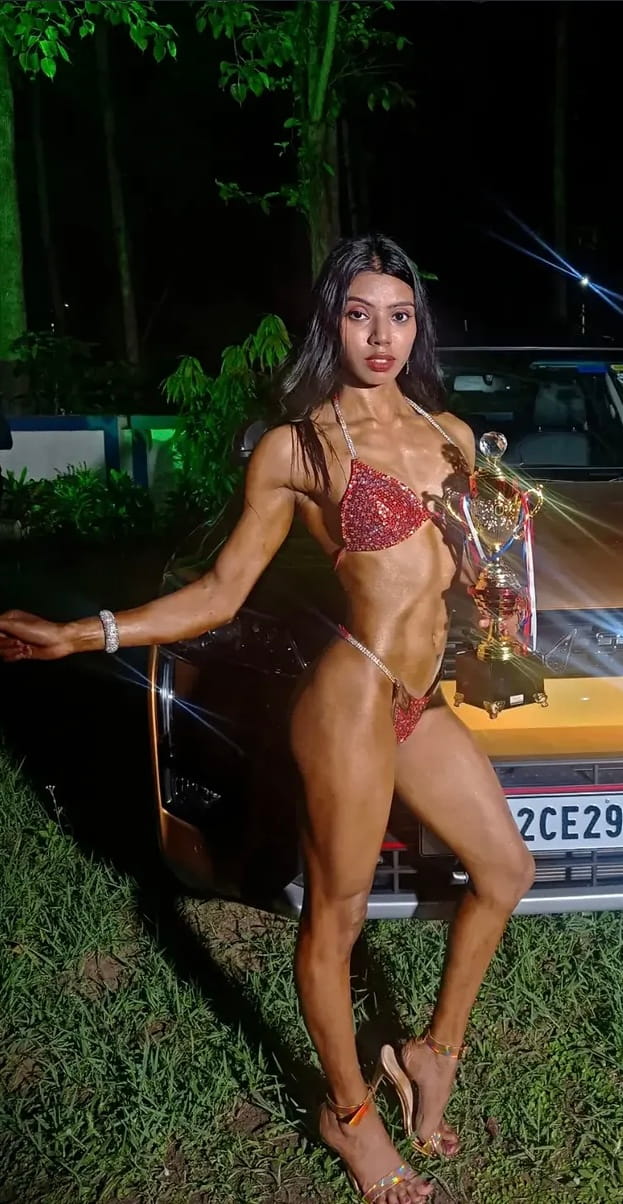
To understand what that actually looks like beyond the stage, Hello Fitness Magazine spoke with Vidya Salve, an Indian physique athlete and three-time Miss Odisha winner, who has been steadily finding her place in the competitive circuit. Her journey begins long before the spotlight ever reaches her.
Where it started
Vidya didn't step into the gym with competition in mind. It began as a routine, something she built around staying fit and paying closer attention to how her body was changing over time.
"I started in 2018 just to improve my fitness and physique," she says. "But as I saw changes in my body, my interest grew stronger."
That shift didn't happen all at once. It built gradually through consistency, and the kind of progress that makes you take your training more seriously. Over time, the routine became more structured, and the approach more deliberate.
"With progress and positive feedback from people, I got a push towards competitive bodybuilding," she adds.
Training, discipline, and the cost
When asked about her preparation, Vidya describes it as going beyond training. "Contest preparation is not just about lifting weights and exercising, but it requires complete lifestyle changes," she says.
A prep day runs on a fixed routine, with training sessions planned in advance and often split between weights and cardio, sometimes twice a day. There isn't much room to adjust things once it begins.
Food follows the same pattern. Meals are measured, repeated, and eaten at specific times, leaving little space for variation. "There's no concept of eating what you feel like," she says. "Everything is planned, and as the competition gets closer, even salt and water intake are monitored."
The physical strain builds over time. As calories drop, energy levels shift, recovery slows, and sessions that once felt routine start to demand more focus.
That carries into the rest of the day as well. Fatigue lingers, and even small tasks feel heavier than usual. The routine, however, stays in place, regardless of how the body responds to it.
"In the end, the stage lasts just a few minutes," Vidya says. "The preparation to get there, however, demands months of control."
Winning, and what it changed
Her early wins didn't make much noise, but they did change how she began to look at the stage. Winning Miss Odisha and then repeating it gave her the sense that she wasn't just participating anymore but could hold her own in that space.
That shift became clearer when she stepped into bigger competitions. A bronze at the Amateur Olympia placed her among athletes operating at a different level, and it pushed her to take the sport more seriously, not just in terms of preparation, but in how she approached each appearance.
Results at events like the Naresh Surya Classic and consistent finishes across federations brought more visibility. Still, they also came with a different kind of expectation. It was no longer just about performing well once; maintaining that standard each time she stepped on stage mattered just as much.
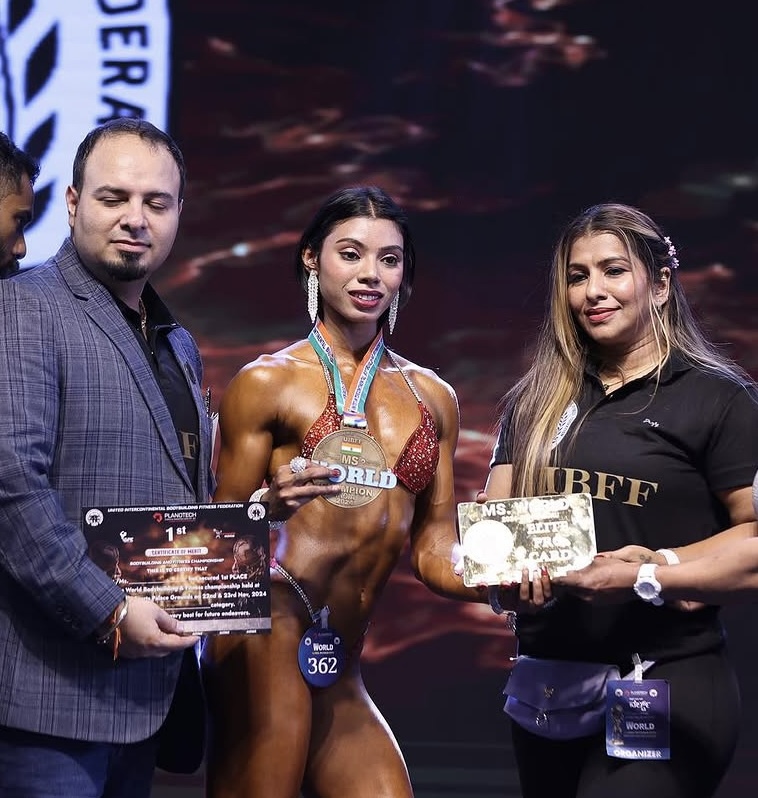
Earning her UIBFF Pro Card after placing first at the UIBFF Championship marked another step in that direction. From there, the focus moved toward refining the smaller details, how she conditioned, how she presented herself, and how she carried each pose.
Over time, the goal itself shifted. What began as trying to prove she could compete gradually turned into the need to improve each time, to show up better than before, even as the stages became more competitive.
India vs Global Stage: The Gap and What Can Change
Competing across different stages hasn't just shaped her as an athlete; it has also influenced how she looks at the sport as a coach. Exposure to higher levels of competition made one thing clear to her: the gap isn't in effort, but in refinement.
"When you step onto an international stage, you realise the difference is in conditioning, detailing, and how athletes present themselves," she says. Posing, she points out, is treated as a skill in itself globally, rather than something left for later.
That understanding has influenced how she prepares and trains others. There is a greater focus on precision now, whether it's sharper conditioning, cleaner execution, or building stage presence with more intent.
At the same time, she acknowledges the limitations in access to advanced coaching and exposure in India, which she continues to address by refining her methods and staying aligned with global standards.
The Road Ahead: Ms Olympia
The goal for Vidya from here is much bigger than anything she has achieved so far. The Ms Olympia stage remains firmly in her sight, not as a general idea, but as something she is actively working towards.
She understands what it demands: earning pro status, stepping into pro shows, and qualifying against some of the best athletes in the world.
"I know the path is clear, even if it's tough. Every prep, every show is taking me one step closer," she says. There is still work to be done on conditioning, symmetry, and stage presence. Still, the direction remains the same as she continues to build on each phase.
Check out Hello Fitness Magazine. There is never a wrong time to go on a fitness quest. Contact us and allow us to assist you in leading a better lifestyle. Follow us on Instagram. We share the best Health & Fitness related Articles for information based on healthy eating, health and fitness recommendations, health problems and their solutions, human body fitness, and much more.