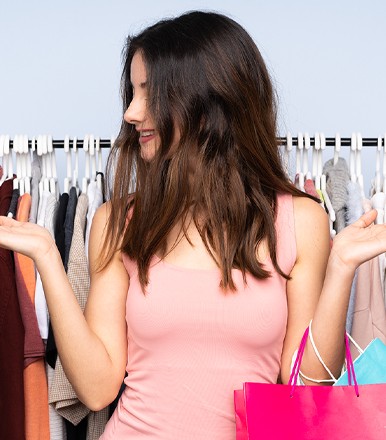




There's a moment most of us recognise. You're scrolling, half-distracted, when a sale notification appears-limited time, extra discount, almost sold out. The decision doesn't feel like one. It feels automatic.
At the same time, somewhere in your saved posts or open tabs, there's a smaller brand you've been meaning to try. You like what they stand for. You like the story. You tell yourself you'll come back to it. And somehow, you don't.
This is the quiet space where our values and our habits begin to diverge. Because the choice between homegrown brands and fast fashion isn't just about clothing-it's about how we balance convenience with intention, and what we prioritise when both are within reach.
The Allure of Speed and Convenience
Fast fashion thrives on urgency. Trends move from runway to rack in weeks. What's viral today will be outdated in three months. The system is built for turnover, quick production, quick consumption, and quick replacement.
The psychology is simple. A lower price often reduces the sense of guilt associated with buying something new, making the decision feel harmless. When products are available instantly, speed removes the pause that might otherwise lead to reconsideration. At the same time, the constant flow of new trends and options prevents emotional attachment to what we already own, encouraging us to move on quickly to the next purchase.
You don't think too hard before buying something that costs less than dinner. And if it doesn't last, it doesn't hurt as much. Fast fashion doesn't sell clothes, it sells relevance.
The Value Behind the Slower Process
Homegrown brands operate differently. They don't produce thousands of identical pieces. They experiment with fabrics, silhouettes, handwork, and storytelling. Many are founder-led. Many are bootstrapped. Many are trying to build something meaningful in a market obsessed with margins.
Their pieces cost more, sometimes significantly more. And that price difference triggers comparison - "Why would I pay ₹3,500 for this when I can get something similar for ₹999?"
But here's the uncomfortable truth: it's rarely similar. Behind a homegrown label is smaller production, fairer wages, limited inventory, higher fabric quality, slower manufacturing cycles, and often local artisans. Behind fast fashion is scale, automation, aggressive cost-cutting, and global supply chains designed for speed. One optimises for volume and the other optimises for value.
Rethinking the Idea of "Affordable"
Fast fashion feels affordable because the cost is immediate and visible. Homegrown brands feel expensive because the investment is upfront. But affordability isn't just about the price tag-it's about how long something actually serves you.
A ₹1,000 top worn twice ends up costing far more per use than a ₹3,500 piece worn repeatedly over time. Yet we rarely think in those terms. We respond to the moment, not the lifecycle.
Fast fashion depends on that short memory. We forget how quickly fabrics lose shape, how seams give way, or how colours fade. We also forget how easily our wardrobes fill up with pieces we no longer feel connected to.
Homegrown brands, in contrast, rely on longevity and repeat use. They are designed to stay, not rotate out. One encourages impulse, while the other builds intention.
Dressing for Identity, Not Algorithms
Beyond price and quality, there's a deeper question of identity. Fast fashion reflects global trends at scale, mirroring what's popular and making it accessible. It tells you what's in, and ensures you can participate instantly.
Homegrown brands move differently. They draw from culture, craftsmanship, and individual design perspectives. Instead of chasing trends, they create a point of view.
Choosing between the two is not just financial, but creative. It's the difference between dressing to match the moment and dressing to express something personal. But individuality comes with effort. It requires repeating outfits, styling pieces in new ways, and being comfortable not always wearing something new.
The Environmental Cost We Don't See
The environmental impact of fast fashion has become harder to ignore. High water consumption, textile waste, and landfills filled with barely worn garments are part of a system built on constant turnover.
Homegrown brands are not automatically sustainable, but many move in that direction through smaller production runs, mindful sourcing, and reduced waste. The difference often lies in scale. Fast fashion depends on overconsumption to survive, while homegrown brands depend on thoughtful, repeat consumption. One needs you to buy more, while the other needs you to buy better.
The Social Media Paradox
Ironically, both ecosystems thrive online. Fast fashion dominates because it can react to trends in real time. Homegrown brands grow through storytelling, community building, and authenticity.
But we, as consumers, are conflicted. We want unique outfits, but we also want new outfits for every post. We want to support small brands, but we also want discounts. We want sustainability, but we don't want to publicly repeat clothes.
So the real question isn't "Which is better?" - The real question is: "What kind of consumer are we choosing to be?"
It's About Better Choices, Not Perfect Ones
This isn't a moral lecture against fast fashion. For many, affordability is non-negotiable. Accessibility matters. Budget constraints are real.
But awareness matters too. Fast fashion can become an occasional choice rather than a routine habit. Homegrown brands can be approached as thoughtful investments rather than indulgences. The focus can shift toward buying fewer pieces and styling them creatively, instead of equating a larger wardrobe with greater variety.
Fashion is not just fabric. It's economics, psychology, and identity, and every purchase is a vote, for trend or story or for impulse or intention.
In the end, it's not about shaming fast fashion or romanticising homegrown labels. It's about understanding trade-offs. Cheap is never just cheap, and expensive is never just expensive. We are always paying - if not with money, then with longevity, quality, or impact. The real luxury today isn't buying more, it's choosing consciously and repeating outfits without apologising.
Check out Hello Fitness Magazine. There is never a wrong time to go on a fitness quest. Contact us and allow us to assist you in leading a better lifestyle. Follow us on Instagram. We share the best Health & Fitness related Articles for information based on healthy eating, health and fitness recommendations, health problems and their solutions, human body fitness, and much more.