


How Our Grandmothers Protected the ‘vibes’ of Our Homes
Going back to base, willingly, is what growing up is really about. Moving forward to follow trends and finding yourself somewhere near your roots is the irony that is least talked about.
We are in an era where the inclination towards mindful living is real and inculcated like never before. Every day, a new practice or product becomes trendy, but it's not necessary that what’s trendy is also new.
While chasing trends, we overlook that the wisdom we’re seeking might already be part of us, and here in Nani ka Pitara, we aim to rediscover such timeless gems.
Aren’t we just following them?
As our understanding of mindful living evolves, we believe that homes and our surroundings need energy cleansing from time to time. We now talk about space clearing with sage sticks, sound therapy with singing bowls, and mindful living through decluttering home activity. But weren’t these already there in our homes?
Grandma’s camphor smoke was our sage. Her evening bell-ringing and bhajans were our sound therapy. The minimal, intentional way she arranged her home, with no excess and everything with a purpose, was our version of minimalism.
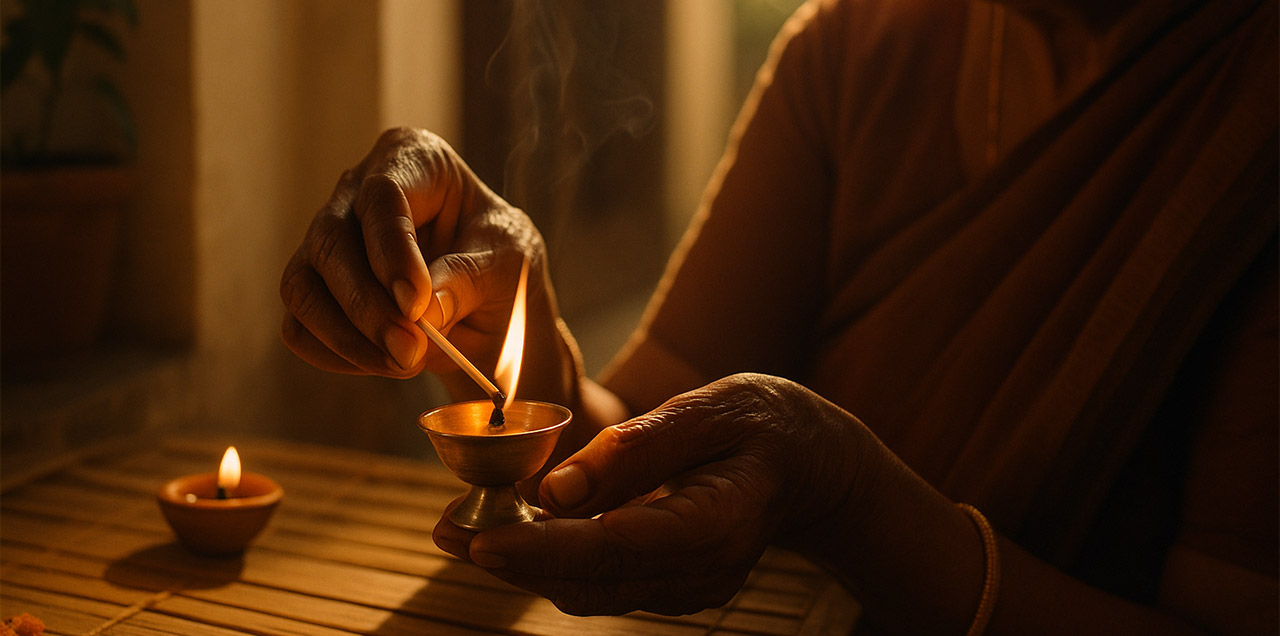
A quiet wisdom lives in the walls of old homes. Our grandmas didn’t speak of “vibes” or “energy clearing,” but everything they did, from when they opened the windows to when they lit a diya, was a gentle choreography of energy protection. The home wasn’t just a building. It was a being.
The Home as a Living Entity
We in India have always been taught that home is never just bricks and walls. It is a living space, one that breathed, absorbed, retained, and reflected the energy of the people within it. Our ancestors believed that just like the body has life force, homes too held a subtle form of energy that needed to be kept clean, calm, and flowing.
The lady of our houses, mums and grandmas, might not have used words like “frequency” or “energy blockages,” but she knew, intuitively, when the space felt heavy. Whether it was after a family argument or a restless night, she’d respond: not with therapy, but with rituals.
And each ritual had a rhythm. A science. A logic. A love.
Maintenance through silence
Every afternoon, after lunch, curtains were drawn, TVs switched off, and everyone hushed into stillness. “Ghar ko aaraam chahiye,” grandma murmured, as if the home, too, needed to lie down and rest.
What we now call an energy reset, our elders practised naturally. This mid-day silence allowed the emotional and physical charge of the morning to settle. In that quiet, the space would recalibrate.
Science backs this now. Overstimulation (sound, movement, screens) increases cortisol levels. Quiet spaces lower stress not just in humans, but in our environment. Homes echo emotional vibrations just as they echo sound.
Thresholds - Borders of Energy
You were never allowed to step into Nani’s house with shoes on; some of us still follow that, not just because of dirt, but because of carry-over energy. Footwear carries both physical germs and subtle residue from where you've been — streets, hospitals, chaos.
At the entrance, a small diya and camphor-infused incense stick were placed near the tulsi, creating a firewall. These weren’t ornamental; fire and sacred herbs like tulsi are natural purifiers. Smoke alters air quality, but also disperses stagnant energy. Camphor, for instance, not only removes odours and bacteria but also breaks dense energetic clusters.
The Dusk Rituals
As the sun dipped, lights were dimmed, incense lit, and chants played softly. Bells would ring. And the entire house would slow down. It’s aarti time. We all remember those evenings. They used to soothe us deep within the soul. Try it, still works.
We now understand this as circadian syncing, aligning body rhythms with natural light cycles. But for Nani, it was about invoking calm, the kind that cleaned the emotional dust of the day.
During aarti, no one was allowed to shout, run, or interrupt. Because that was her moment to shift the house’s mood. Just like a therapist’s tone resets a room, her rituals reset the home’s energy, from chaotic to sacred.
Cleaning- a practice, not a chore
Mornings began early. Sweeping before sunrise. Sprinkling water at the threshold. Wiping surfaces with neem/salt water or cow dung. It may seem like superstition to some, but here’s what it was:
Sweeping early: In Ayurveda, early morning is a sattvic time — pure, clear, light. Cleaning then helps remove not just dirt but also the overnight buildup of energy.
Water sprinkling: Symbolic of calming down “dusty” energy. In science, water in the air increases negative ions, which are known to uplift mood and neutralise pollutants.
Using neem/cow dung: Natural antiseptics. And spiritually, both are known to dispel negativity and prevent disease-causing energies.
Everything Had Reasons
Never place mirrors opposite beds. Cover the TV at night. Make sure the kitchen fire was respected; never blown out, only softly extinguished.
These weren’t arbitrary rules.
Mirrors are thought to bounce energy — placing them opposite the bed reflects the body in sleep, disturbing rest and energy absorption.
Televisions, even when off, emit electromagnetic fields. Covering them reduced stimulation.
The kitchen fire was sacred — the giver of nourishment. You never blew on it. You bowed.
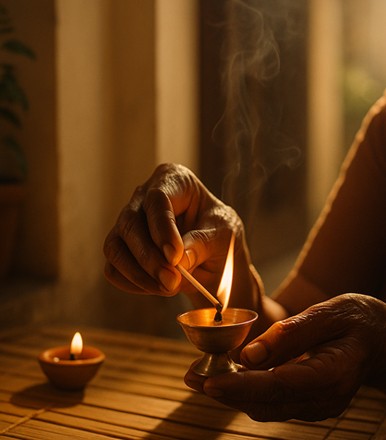
Lighting diyas in the evening aligned the home’s rhythm with sunset. Fire transforms mood and acts as a cleansing source.
Burning camphor cleared microbial presence and elevated the olfactory field, a direct way to shift emotional tone.
Playing chants or bhajans was not for God alone — it was also for us. Sound carries frequency. And Nani made sure her home stayed tuned to peace.
A Wisdom to Inherit
In today’s homes, where doors open to noise and screens, where energy flows with no pause, perhaps we need Grandmas more than ever—or at least, her way.
Maybe we don’t need new gadgets to clear our homes.
Maybe we just need to bring back the silence, the rituals, and the reverence.
To light a diya. To sit in silence.
To treat our homes not just as shelters, but as living, breathing beings that deserve love and care.
Check out Hello Fitness Magazine. There is never a wrong time to go on a fitness quest. Contact us and allow us to assist you in leading a better lifestyle. Follow us on Instagram. We share the best Health & Fitness related Articles for information based on healthy eating, health and fitness recommendations, health problems and their solutions, human body fitness, and much more.