


Do your legs feel stiff after sitting for long hours or completing a workout? Your hamstrings may need some attention. These muscles run along the back of your thighs and help you bend your knees, move your hips and perform everyday activities such as walking, running and climbing stairs.
Spending a lot of time sitting, following a demanding exercise routine or having limited flexibility can contribute to a feeling of tightness around the back of your thighs. Regular stretching may help improve flexibility and make certain movements more comfortable.
However, the right technique matters. Stretching too far or ignoring pain can make the experience uncomfortable and may aggravate an existing injury.
In this guide, you will learn how to stretch hamstrings correctly, which exercises you can try at home, how long to hold each stretch and what to avoid when building a stretching routine.
What Are the Hamstrings?
The hamstrings are a group of three muscles located along the back of each thigh. They extend from the lower part of the pelvis to the bones around the knee.
These muscles help bend your knees and move your hips. They are also involved in activities such as walking, running, climbing stairs, squatting and bending forward.
When the hamstrings have limited flexibility, certain movements may feel restricted. However, a feeling of tightness does not always mean that the muscles are physically short. It can sometimes be associated with exercise-related fatigue, irritation or other conditions.
Why Do Hamstrings Feel Tight?
Several factors may contribute to hamstring tightness.
- Prolonged sitting with limited movement throughout the day.
- Limited flexibility or a lack of regular movement.
- Changes in exercise intensity or training routines.
- Muscle fatigue after running, cycling or strength training.
- Previous hamstring injuries or other problems affecting the back, hips or legs.
Stretching may help when limited flexibility is contributing to the problem. However, persistent tightness or discomfort may need a different approach, particularly if strengthening exercises or treatment for an underlying condition are required.
What Are the Benefits of Hamstring Stretches?
Hamstring stretching can be a useful part of a regular fitness routine. Its benefits depend on your current flexibility, the exercises you perform and how consistently you practise them.
Improved Flexibility
Regular stretching can gradually improve the range of motion around your hips and knees. This may make it easier to bend forward, straighten your legs comfortably and perform different exercises.
Better Movement During Everyday Activities
Flexible hamstrings can help you move more comfortably during activities such as walking, climbing stairs and bending to pick something up.
However, flexibility is only one part of good movement. Muscle strength, balance and coordination also play important roles.
Support for an Exercise Routine
Hamstring stretches can complement activities such as walking, running, cycling and strength training. They can help you work on flexibility alongside other fitness exercises.
Stretching should not replace strength training or a proper warm-up. Research also does not support the idea that stretching alone prevents every type of exercise-related injury.
Reduced Feeling of Stiffness
Some people find that gentle stretching temporarily eases the feeling of stiffness after sitting or exercising.
If the tightness keeps returning, stretching more forcefully is not necessarily the answer. The cause may involve muscle weakness, irritation or another issue that requires a different approach.
How to Stretch Hamstrings Safely
Before trying different hamstring stretching exercises, learn a few basic techniques.
Start with five to ten minutes of light activity, such as walking, before performing longer static stretches. Move slowly into each position until you feel a gentle pull along the back of your thigh.
Keep breathing normally and avoid bouncing. A stretch should not cause sharp pain, numbness or tingling.
For many general flexibility routines, holding a stretch for around 20 to 30 seconds is a reasonable starting point. Beginners can start with a shorter hold and gradually increase it as they become more comfortable. Repeat on both sides as appropriate.
If you have a current injury or a medical condition affecting your movement, ask a healthcare professional or physiotherapist which stretches are suitable for you.
7 Best Hamstring Stretches to Try at Home
The following stretches offer different ways to work on hamstring flexibility. Choose the positions that feel comfortable and suit your current level of mobility. You do not need to perform all seven in one session.
1. Lying Hamstring Stretch with a Towel
The lying hamstring stretch is a useful starting point for beginners because the floor supports your back while you work on one leg at a time.
How to do it:
- Lie on your back on a comfortable exercise mat.
- Bend one knee and place your foot on the floor.
- Loop a towel or stretching strap around the other foot.
- Slowly lift that leg towards the ceiling, using the towel to support it.
- Keep a slight bend in the knee if straightening it fully feels uncomfortable.
- Stop when you feel a gentle stretch along the back of your thigh.
- Hold for 20 to 30 seconds, then lower the leg slowly.
- Repeat with the other leg.
Avoid pulling the leg towards your body with excessive force. Your hips should remain comfortable, and your lower back should not feel strained.
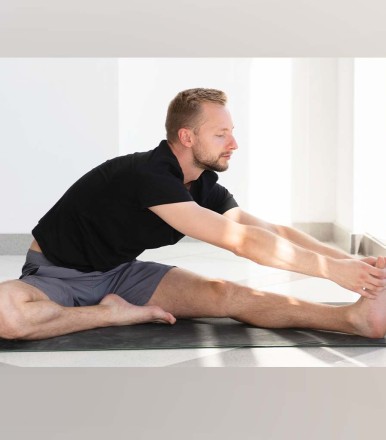
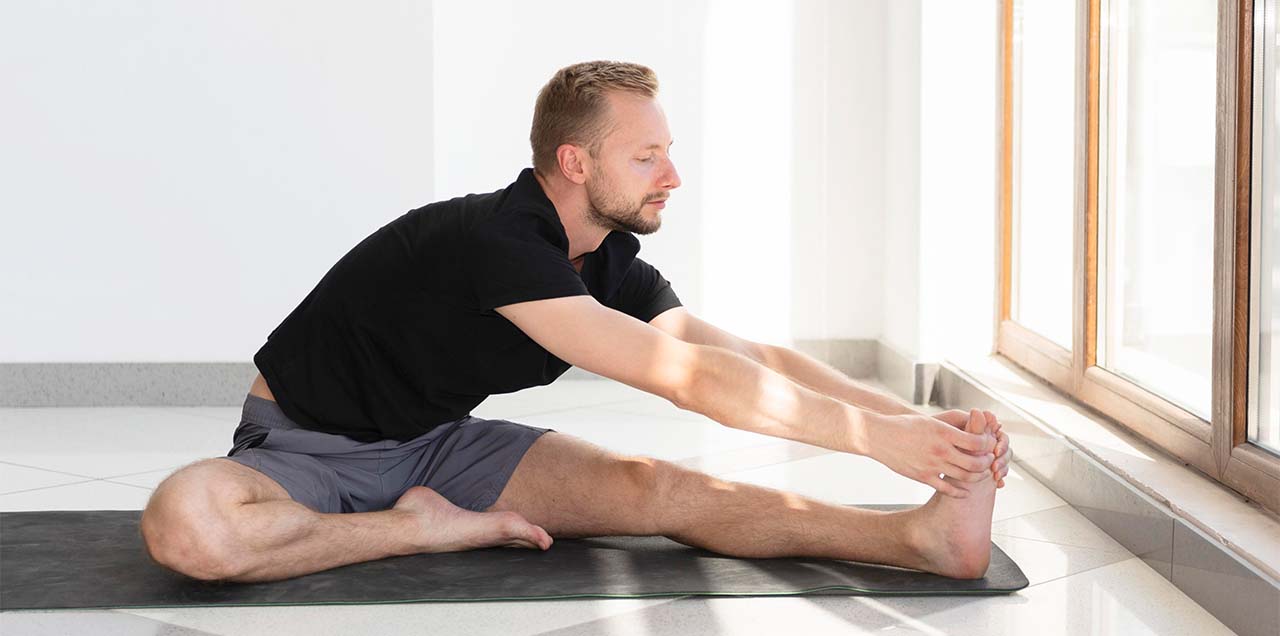
2. Seated Hamstring Stretch on the Floor
This stretch works well if you can sit comfortably on the floor and extend one leg in front of you.
How to do it:
- Sit on the floor with both legs extended in front of you.
- Bend one knee and bring that foot towards the inner thigh of the opposite leg.
- Keep the extended leg comfortably straight, without forcing the knee down.
- Sit tall and gently lean forward from your hips.
- Reach towards your shin or ankle only as far as you comfortably can.
- Hold for 20 to 30 seconds.
- Return to the starting position and switch sides.
You do not need to touch your toes to benefit from the stretch. Reaching further by rounding your back excessively can make the position less comfortable without improving the stretch in the way you intend.
3. Seated Hamstring Stretch on a Chair
If sitting on the floor is difficult, a chair can provide a more accessible option.
How to do it:
- Sit near the front edge of a sturdy chair.
- Place both feet on the floor.
- Extend one leg forward, keeping the heel on the ground and the toes pointing upwards.
- Keep your back comfortably straight.
- Gently lean forward from your hips until you feel a stretch behind the extended thigh.
- Hold for 20 to 30 seconds.
- Sit upright again and repeat with the other leg.
Keep your movements controlled and avoid leaning so far forward that you lose a comfortable back position.
This is one of the good hamstring stretches for people who work at a desk or prefer not to exercise on the floor.
4. Standing Hamstring Stretch
A standing hamstring stretch is convenient because it requires little space and no exercise equipment.
How to do it:
- Stand with your feet about hip-width apart.
- Place one foot slightly in front of the other, with the front heel on the floor and toes pointing upwards.
- Bend the back knee slightly.
- Keep your back comfortably straight and your hips facing forward.
- Gently move your hips backwards while leaning forward.
- Stop when you feel a stretch along the back of the front thigh.
- Hold for 20 to 30 seconds before changing legs.
You can rest your hands on your thighs for support. Avoid rounding your back to reach towards the front foot.
5. Wall-Assisted Hamstring Stretch
A wall-assisted stretch allows you to work on flexibility while lying down. It can be useful if standing or seated positions feel uncomfortable.
How to do it:
- Lie on your back near a doorway or an open corner where you have enough space.
- Position one leg along the wall or doorway, depending on your setup.
- Raise the other leg towards the ceiling, keeping it supported as needed.
- Gently straighten the raised leg until you feel a mild stretch at the back of the thigh.
- Keep the knee slightly bent if necessary.
- Hold for around 20 to 30 seconds.
- Relax and repeat on the opposite side.
Make sure the wall or doorway provides stable support and that you have enough space to move safely. Do not force the leg into a higher position simply to increase the stretch.
6. Single-Leg Hamstring Stretch with the Heel Supported
This stretch uses a low, stable surface to support one heel. It is a useful option if you prefer standing exercises but want to control the amount of stretch.
How to do it:
- Stand in front of a low, sturdy step or exercise platform.
- Place one heel on the surface, keeping the toes pointing upwards.
- Keep the supporting leg slightly bent.
- Align your hips towards the supported leg.
- Gently lean forward from your hips while maintaining a comfortable back position.
- Stop when you feel a stretch along the back of the raised thigh.
- Hold for 20 to 30 seconds and switch legs.
Use a low surface rather than a high table or chair. A higher position is not automatically better and may make it harder to maintain balance.
7. Gentle Dynamic Hamstring Movements
Dynamic stretches involve controlled movement rather than holding one position for an extended period. They can be useful during a warm-up before activities such as walking, jogging or sports.
One simple option is a controlled leg swing.
How to do it:
- Stand beside a wall or another stable support.
- Hold the support lightly for balance.
- Keep your upper body upright.
- Gently swing one leg forwards and backwards through a comfortable range.
- Keep the movement controlled instead of kicking forcefully.
- Continue for around 8 to 10 swings, then change legs.
Start with small movements and gradually increase the range if it feels comfortable.
Dynamic movements are not the same as forceful ballistic stretching. Avoid swinging your leg aggressively or trying to reach the greatest possible height.
Best Hamstring Stretches for Different Needs
The best hamstring stretch depends on your flexibility, comfort and the situation in which you plan to stretch.
Good Hamstring Stretches for Beginners
If you are new to stretching, start with the lying hamstring stretch using a towel or the seated chair stretch.
Both allow you to control the movement and adjust how far you stretch. Begin with a gentle pull rather than trying to achieve a deep stretch immediately.
Practise consistently and increase the range gradually as your comfort improves.
Hamstring Stretches You Can Do at Your Desk
Long periods of sitting may leave some people feeling stiff when they stand up.
The seated chair stretch can be a convenient option during a work break. Sit near the front of the chair, extend one leg and gently lean forward from your hips.
You can also stand up and walk for a few minutes. Changing positions regularly may be more helpful than relying on stretching alone throughout the day.
Stretches for Hamstrings After a Workout
After a workout, when your muscles are warm, you can use gentle static stretches to work on flexibility.
The lying towel stretch, seated floor stretch and standing stretch are practical options. Choose one or two and hold each position comfortably.
Stretching after exercise is a useful time to work on flexibility, but it should not be treated as a guaranteed way to prevent muscle soreness or injury.
Gentle Options for People with Limited Mobility
If you have difficulty getting down to the floor, try the seated chair stretch.
People who have trouble balancing may also prefer a supported position rather than standing on one leg or placing a heel on a raised surface.
If a movement causes pain or you have a condition affecting your hips, back or legs, seek individual advice from a physiotherapist before starting a new routine.
Hamstring Stretching Exercises Before and After Workouts
The type of stretching you choose can depend on what you plan to do afterwards.
Dynamic Movements for a Warm-Up
Before running, playing sports or performing demanding exercise, start with light activity to raise your body temperature.
You can then include controlled movements such as gentle leg swings or other dynamic exercises suited to your activity.
The aim is to prepare your body for movement, not to push your flexibility to its limit.
Static Stretches for Flexibility
Static stretching involves moving into a position and holding it for a set period.
For example, you might perform a lying hamstring stretch and hold it for around 20 to 30 seconds before changing legs.
This type of stretching is useful when your main goal is to improve flexibility over time.
How to Choose Based on Your Activity
For a general fitness session, start with light movement and use dynamic exercises during the warm-up. You can include static stretches after your workout or during a separate flexibility session.
If your activity involves sprinting, jumping or other explosive movements, avoid long periods of intense static stretching immediately beforehand. Use an appropriate warm-up that prepares you for the demands of the activity.
How Often Should You Do Hamstring Stretches?
Consistency is more important than forcing a deep stretch in a single session.
For general flexibility, you can start by stretching two to three days a week and adjust the routine according to your comfort and needs.
For each static stretch, begin with a hold of around 20 to 30 seconds. Repeat on both sides, usually two or three times if comfortable.
If you are new to stretching, shorter holds may be easier to manage. Increase the duration gradually rather than pushing through discomfort.
You may notice improvements in flexibility over time, but progress varies between individuals. If your hamstrings continue to feel unusually tight despite regular stretching, consider whether strengthening exercises or a professional assessment may be more appropriate.
Common Hamstring Stretching Mistakes to Avoid
Even simple hamstring stretches can become uncomfortable when performed incorrectly.
Stretching Too Far
Trying to touch your toes or raise your leg as high as possible can lead you to force the movement. Stop when you feel a gentle pull rather than pushing for maximum range.
Bouncing During a Static Stretch
Repeatedly bouncing at the end of a stretch can make it harder to control the movement. Move slowly into position and hold it steadily.
Rounding Your Back Excessively
When performing seated or standing stretches, bend forward from your hips while maintaining a comfortable back position. Do not force your upper body towards your feet.
Holding Your Breath
Continue breathing normally throughout the stretch. Holding your breath can create unnecessary tension and make the exercise less comfortable.
Ignoring Pain
A mild pulling sensation is generally expected during a stretch. Sharp pain, tingling, numbness or pain that travels down the leg is different and should not be ignored.
Stretching Without Considering Strength
Flexibility is only one aspect of muscle function. If your hamstrings repeatedly feel tight, a suitable strengthening programme may be needed alongside stretching. A physiotherapist can help identify the right approach.
When Should You Avoid Hamstring Stretching?
Gentle stretching is generally suitable for many healthy adults, but it is not appropriate for every situation.
If you experience sudden pain at the back of your thigh during running or exercise, particularly with swelling, bruising or difficulty walking, you may have a hamstring injury. Stop the activity and seek medical assessment rather than attempting to stretch the muscle forcefully.
You should also seek professional advice if stretching causes numbness, tingling, sharp pain or symptoms that travel from your back into your leg.
Persistent tightness that does not improve, or discomfort that repeatedly returns, may have causes other than limited muscle flexibility.
A doctor or physiotherapist can assess your symptoms and recommend suitable stretching, strengthening or other treatment where needed.
Frequently Asked Questions
How do you stretch the hamstrings correctly?
Start with a gentle warm-up, then choose a comfortable position such as a lying towel stretch or seated chair stretch. Move slowly until you feel a mild pull along the back of your thigh. Hold for around 20 to 30 seconds while breathing normally, and avoid bouncing or forcing the movement.
What is the best hamstring stretch for beginners?
The lying hamstring stretch with a towel is a good starting option for many beginners because the floor supports your back and the towel helps control the leg position. A seated chair stretch is another useful alternative if getting down to the floor is difficult.
How long should you hold a hamstring stretch?
For general flexibility, holding a static stretch for around 20 to 30 seconds is a reasonable starting point. Beginners can start with shorter holds and gradually increase the duration as they become more comfortable.
Can sitting all day make hamstrings feel tight?
Long periods of sitting can contribute to a feeling of stiffness, particularly when you move very little throughout the day. Taking regular movement breaks and practising suitable stretches may help. However, persistent tightness does not always mean the hamstrings need more stretching.
Should you stretch hamstrings before or after exercise?
Before exercise, begin with light activity and use controlled dynamic movements to prepare your body. Static stretches can be included after exercise or in a separate flexibility session. The best approach depends on the activity and your individual needs.
Can hamstring stretches help with lower back discomfort?
Stretching may help some people when limited hamstring flexibility contributes to discomfort, but lower back pain has many possible causes. Hamstring stretching is not a universal treatment for back pain. If symptoms persist or worsen, consult a healthcare professional.
Conclusion
Hamstring stretching can be a simple way to work on flexibility and support comfortable movement during everyday activities. You do not need complicated equipment or a long routine to get started.
Begin with easy options such as the lying towel stretch or seated chair stretch. Focus on controlled movement, maintain a comfortable position and avoid forcing your legs beyond their natural range.
As you become more comfortable, you can add other stretches and gentle dynamic movements to suit your exercise routine. Remember that flexibility is only one part of fitness. Strength, regular movement and appropriate recovery are also important.
If tightness continues or stretching causes pain, do not simply push harder. Consider seeking advice from a physiotherapist to understand what may be causing the problem and which exercises are right for you.
Check out Hello Fitness Magazine. There is never a wrong time to go on a fitness quest. At Hello Fitness Magazine, our aim is to help you make informed choices about everyday fitness through practical, easy-to-follow guidance. Start with a routine that feels manageable, practise consistently and allow your flexibility to improve gradually. Contact us and allow us to assist you in leading a better lifestyle. Follow us on Instagram. We share the best Health & Fitness related Articles for information based on healthy eating, health and fitness recommendations, health problems and their solutions, human body fitness, and much more.