


Water chestnuts, commonly known as singhara in India, are crunchy aquatic vegetables with a mild, slightly sweet flavour. Despite their name, they are not related to the tree nuts commonly known as chestnuts.
They are eaten fresh, cooked in different dishes and also processed into singhara flour, which is widely used in India, particularly during fasting periods.
Water chestnuts are mainly a source of carbohydrates, but they also provide dietary fibre, potassium and several vitamins and minerals. Their naturally low fat content and moderate calorie value make them an interesting addition to a balanced diet.
But how nutritious are water chestnuts? How many calories do they contain, and what are the potential benefits of eating them?
This guide explains water chestnut benefits, calories, nutritional value, carbohydrates, fibre, protein and practical ways to include singhara in your diet.
What Are Water Chestnuts?
Water chestnuts are the edible corms of an aquatic plant called Eleocharis dulcis. They are also commonly called Chinese water chestnuts.
They have a white, crisp interior and a thin outer skin. Their slightly sweet flavour and crunchy texture make them popular in Asian cooking.
In India, water chestnuts are commonly known as singhara. Singhara flour is also used to prepare foods such as rotis, puris, pancakes and other fasting recipes.
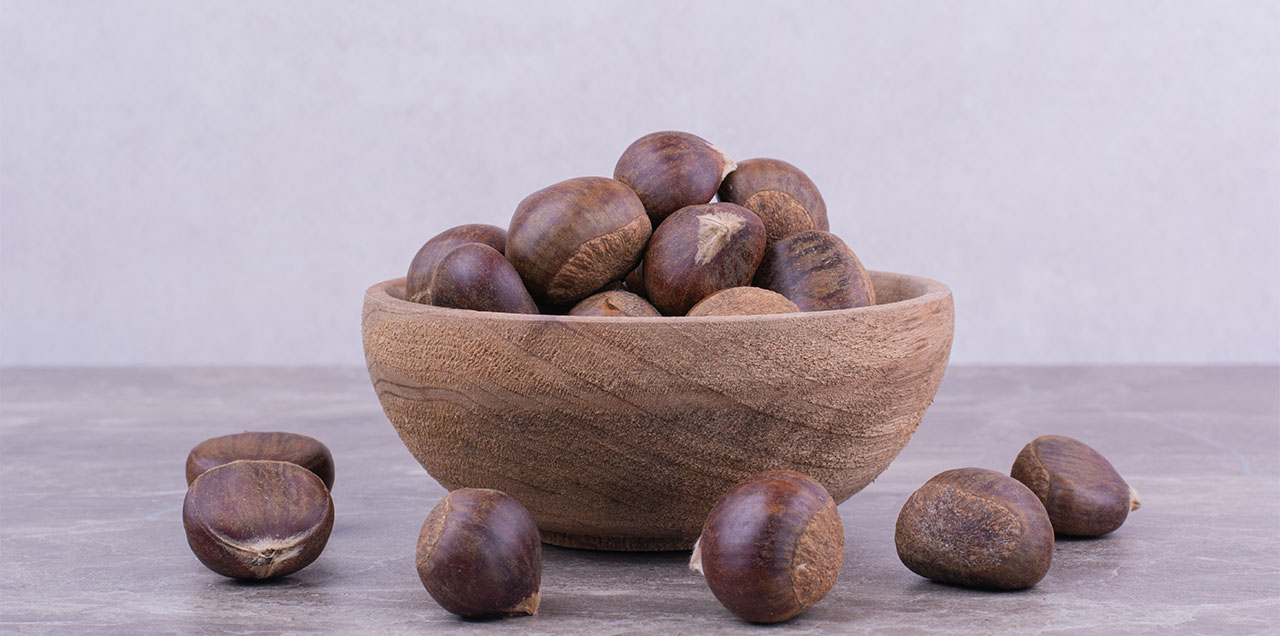
Although they have "chestnut" in their name, water chestnuts are botanically different from edible tree chestnuts.
Water Chestnut Nutrition Facts
According to USDA-derived nutrition data, 100 grams of raw water chestnuts provides approximately:
- 97 calories
- 23.9 grams of carbohydrates
- 3 grams of dietary fibre
- 1.4 grams of protein
- 0.1 gram of fat
- 4.8 grams of naturally occurring sugars
- 584 mg of potassium
- 63 mg of phosphorus
- 22 mg of magnesium
- 11 mg of calcium
- 4 mg of vitamin C
- 0.33 mg of vitamin B6
- 0.14 mg of vitamin B1
- 0.20 mg of vitamin B2
- 16 mcg of folate
These figures refer to raw water chestnuts. The nutritional profile can change depending on whether they are cooked, canned or prepared with other ingredients.
How Many Calories Are in Water Chestnuts?
Raw water chestnuts contain approximately 97 calories per 100 grams.
Most of these calories come from carbohydrates because water chestnuts contain a considerable amount of starch. They contain very little fat and a relatively small amount of protein.
The calories in a prepared water chestnut dish can be considerably different from those in the raw vegetable. Cooking them with oil, ghee, sugar or calorie-dense sauces will increase the overall calorie content.
For this reason, portion size and preparation method are important when considering water chestnuts as part of a weight-management diet.
Water Chestnut Carbohydrates
Carbohydrates are the main macronutrient in water chestnuts.
A 100-gram serving of raw water chestnuts provides around 23.9 grams of carbohydrates. This includes approximately 4.8 grams of naturally occurring sugars and 3 grams of dietary fibre.
The remaining carbohydrates are largely starch.
Because of this carbohydrate content, water chestnuts can contribute energy to a meal. People who need to monitor their carbohydrate intake, including those managing blood glucose, should consider their portion size and how they are combined with other foods.
Water Chestnut Protein Content
Water chestnuts are not a high-protein food.
A 100-gram serving provides approximately 1.4 grams of protein.
This means they should not be relied upon as a major protein source. Instead, they can be combined with protein-rich foods such as dal, beans, curd, paneer, eggs, fish or other suitable sources to create a more balanced meal.
Water Chestnut Fat Content
Raw water chestnuts are naturally very low in fat, providing around 0.1 gram of fat per 100 grams.
This makes them a low-fat food in their natural form.
However, the cooking method can significantly change the fat and calorie content. Deep-fried singhara preparations or dishes made with generous amounts of ghee or oil will contain considerably more fat than fresh or simply cooked water chestnuts.
Water Chestnut Fibre Content
Water chestnuts provide approximately 3 grams of dietary fibre per 100 grams.
Fibre is an important part of a healthy diet and supports normal digestive function. It can also contribute to fullness after meals.
However, water chestnuts should not be considered an exceptionally high-fibre food. Pulses, beans, whole grains, seeds, fruits and many vegetables can provide substantial amounts of fibre as well.
Including a variety of fibre-rich foods is a better approach than relying on one ingredient.
Water Chestnut Benefits
1. Provides Dietary Fibre
One of the nutritional benefits of water chestnuts is their fibre content.
A 100-gram serving provides around 3 grams of dietary fibre. Fibre contributes to normal bowel function and can form an important part of a balanced eating pattern.
Including water chestnuts alongside other fibre-rich foods can help increase overall dietary fibre intake.
2. Contains Potassium
Water chestnuts are a useful source of potassium, providing approximately 584 mg per 100 grams according to USDA-derived nutrition data.
Potassium is an essential mineral involved in normal muscle function, nerve signalling and fluid balance.
However, eating water chestnuts should not be viewed as a treatment for high blood pressure or any other medical condition. Overall dietary intake matters more than one individual food.
3. Provides Vitamin B6
Water chestnuts contain vitamin B6, with approximately 0.33 mg per 100 grams.
Vitamin B6 contributes to normal protein metabolism, nervous system function and red blood cell formation.
A varied diet containing vegetables, fruits, pulses, whole grains and other nutrient-rich foods can provide vitamin B6 from several sources.
4. Contains Other B Vitamins
Water chestnuts also provide smaller amounts of B vitamins, including thiamine, riboflavin, niacin and folate.
These vitamins are involved in several normal processes in the body, including energy metabolism and cell function.
However, water chestnuts should be viewed as one contributor to overall nutrient intake rather than a concentrated source of every vitamin.
5. Naturally Low in Fat
Raw water chestnuts contain very little fat.
This can make them useful when you want to add a crunchy carbohydrate-containing ingredient to a meal without adding much fat from the food itself.
The final nutritional profile still depends on preparation. Adding large amounts of oil, ghee or other fats can significantly increase the calorie content.
6. Provides Some Vitamin C
Water chestnuts contain a modest amount of vitamin C, with around 4 mg per 100 grams.
Vitamin C contributes to normal immune function, collagen formation and iron absorption.
However, water chestnuts are not one of the richest sources of vitamin C. Foods such as amla, guava, citrus fruits and certain vegetables provide considerably more.
7. Adds Variety to a Balanced Diet
Nutrition is not only about individual nutrients.
Water chestnuts have a distinctive crunchy texture and mild flavour, which can make meals more varied. They can be added to salads, stir-fries, soups and vegetable dishes.
Having a varied diet can make healthy eating more enjoyable and easier to maintain over time.
Are Water Chestnuts Good for Weight Loss?
Water chestnuts can be included in a weight-management diet, but they are not a food that directly causes weight loss.
At around 97 calories per 100 grams, raw water chestnuts can fit into a moderate-calorie eating pattern. Their fibre content can also contribute to fullness.
However, successful weight management depends on the overall balance between calorie intake, physical activity, dietary quality and individual requirements.
The way water chestnuts are prepared also matters. A fresh water chestnut salad and a deep-fried singhara snack can have very different calorie values.
Water Chestnuts and Blood Sugar
Water chestnuts are primarily a carbohydrate-containing food, so portion size can be important for people who need to manage blood glucose.
Their fibre content can contribute to a balanced carbohydrate-containing meal, but water chestnuts should not be considered a treatment for diabetes.
Combining carbohydrate-rich foods with protein, vegetables, fibre and appropriate sources of fat can help create a more balanced meal.
People with diabetes or other blood glucose concerns should follow individual dietary advice from a healthcare professional or registered dietitian.
Water Chestnuts and Digestive Health
The dietary fibre in water chestnuts can contribute to normal digestive function.
Fibre helps support regular bowel movements and forms an important part of a healthy eating pattern.
However, it is better to include fibre from several food groups rather than relying on water chestnuts alone. Fruits, vegetables, pulses, beans, whole grains, nuts and seeds can all contribute to daily fibre intake.
If your usual diet is low in fibre, increasing fibre gradually and drinking enough fluids can also be helpful for digestive comfort.
Are Water Chestnuts Good for Women?
Water chestnuts can be included in a balanced diet for women because they provide carbohydrates, fibre, potassium and several micronutrients.
However, there is no special nutritional benefit that makes water chestnuts exclusively beneficial for women.
Nutritional requirements can vary depending on age, activity level, pregnancy, breastfeeding and other individual factors.
Water chestnuts are also relatively low in protein and iron, so women should include other nutrient-rich foods to meet their overall nutritional requirements.
Are Water Chestnuts Good for Men?
Water chestnuts can also form part of a balanced diet for men.
Their carbohydrate content can contribute energy, while their fibre and potassium content add nutritional value to meals.
However, they are not a significant source of protein. Men with higher protein requirements should include appropriate protein-rich foods alongside them.
Fresh vs Canned Water Chestnuts
Fresh and canned water chestnuts can have different nutritional profiles.
Fresh raw water chestnuts contain approximately 97 calories per 100 grams, while canned varieties can contain fewer calories per 100 grams depending on the product and packing liquid.
Canned water chestnuts can be convenient when fresh ones are unavailable. However, it is important to check the nutrition label because sodium and other ingredients can vary between products.
Rinsing canned water chestnuts before use can also help remove some of the packing liquid and may reduce some surface sodium.
How to Eat Water Chestnuts
Water chestnuts can be used in several ways.
Fresh Water Chestnuts
Fresh water chestnuts can be peeled, cleaned and eaten or added to suitable dishes. Their crisp texture makes them useful in salads and vegetable preparations.
Cooked Water Chestnuts
They can be added to stir-fries, soups and other cooked dishes. Their texture can remain relatively crisp after cooking.
Singhara Flour
Singhara flour is widely used in Indian cooking, particularly during fasting. It can be used to prepare rotis, puris, pancakes and other dishes.
Remember that the nutritional value of a singhara flour recipe depends on the complete recipe. Adding substantial amounts of ghee, oil, sugar or other ingredients can increase its calorie content.
Can You Eat Water Chestnuts During Fasting?
Singhara and singhara flour are commonly used during fasting in India, including during Navratri and other religious fasting periods.
They are used to prepare several traditional fasting foods.
However, fasting practices differ between individuals, families and religious traditions. If you follow specific fasting rules, check which ingredients are permitted within your own practice.
From a nutritional perspective, remember that a food made with singhara flour can still be calorie-dense depending on the cooking method and portion size.
Water Chestnuts for Everyday Meals
Water chestnuts can be included in everyday meals without making them the centre of the diet.
You can add them to a vegetable-based meal for extra texture, combine them with protein-rich ingredients or use them as one component of a mixed salad.
Their mild flavour makes them relatively versatile, while their carbohydrate content means they can contribute to the energy value of the meal.
The key is to consider them as one part of an overall balanced eating pattern.
Things to Keep in Mind Before Eating Water Chestnuts
Fresh water chestnuts should be cleaned and prepared properly before eating.
Because they are aquatic produce, hygiene and food handling are important. Choose fresh produce that appears clean and undamaged, wash it properly and peel it before consumption when appropriate.
Canned water chestnuts should be checked for damaged packaging or unusual odour before use and stored according to the instructions on the product.
People with specific medical conditions, food allergies or dietary restrictions should consider their individual requirements when adding new foods to their diet.
Water Chestnut Nutrition: Quick Summary
Raw water chestnuts are mainly a carbohydrate-containing food with very little fat.
Per 100 grams, they provide approximately:
- 97 calories
- 23.9 grams carbohydrates
- 3 grams dietary fibre
- 1.4 grams protein
- 0.1 gram fat
- 584 mg potassium
- 4 mg vitamin C
- 0.33 mg vitamin B6
The exact nutritional value can vary depending on whether the water chestnuts are raw, cooked or canned, as well as the portion size and preparation method.
Frequently Asked Questions
How many calories are in 100 grams of water chestnuts?
Raw water chestnuts contain approximately 97 calories per 100 grams.
Are water chestnuts good for weight loss?
Water chestnuts can fit into a weight-management diet because they provide moderate calories and some fibre. However, they do not directly cause weight loss.
Are water chestnuts high in carbohydrates?
Yes. Raw water chestnuts provide around 23.9 grams of carbohydrates per 100 grams, making carbohydrates their main macronutrient.
How much protein is in water chestnuts?
There are approximately 1.4 grams of protein in 100 grams of raw water chestnuts, so they are not considered a high-protein food.
Are water chestnuts good for digestion?
Water chestnuts provide around 3 grams of dietary fibre per 100 grams, which can contribute to normal digestive function as part of a fibre-rich diet.
What are the benefits of eating water chestnuts?
Water chestnuts provide carbohydrates, dietary fibre, potassium and several vitamins and minerals. They are also naturally very low in fat.
Are water chestnuts good for women?
Yes, water chestnuts can be part of a balanced diet for women. They provide fibre, carbohydrates, potassium and other nutrients, but they should be combined with other foods to meet overall nutritional needs.
Are water chestnuts good for men?
Water chestnuts can also be included in a balanced diet for men. They provide carbohydrates, fibre and potassium but are relatively low in protein, so they should be paired with protein-rich foods.
Can I eat singhara during fasting?
Singhara and singhara flour are commonly eaten during fasting in India. Whether they are permitted depends on the specific fasting tradition you follow.
Conclusion
Water chestnuts are a versatile food that can add crunch, carbohydrates and useful nutrients to a balanced diet. They are naturally low in fat and provide dietary fibre, potassium, vitamin C, vitamin B6 and other micronutrients.
With approximately 97 calories per 100 grams, raw water chestnuts can be included in meals and snacks when portion size and preparation are considered.
Their nutritional value is best understood as part of the overall diet rather than as a collection of isolated health benefits. Pairing singhara with vegetables, pulses, dairy products, eggs or other protein-rich foods can help create more balanced meals.
Whether you enjoy fresh water chestnuts, use them in cooked dishes or choose singhara flour during fasting, variety and moderation remain important for a healthy eating pattern.
Check out Hello Fitness Magazine. There is never a wrong time to go on a fitness quest. Contact us and allow us to assist you in leading a better lifestyle. Follow us on Instagram. We share the best Health & Fitness related Articles for information based on healthy eating, health and fitness recommendations, health problems and their solutions, human body fitness, and much more.